A No-Contact Approach to Mold Making and Casting
Our client approached us with a unique request: to create a cast of a nude figure sculpture she had crafted during a life model sculpting workshop in Rome, with one critical condition - the original Plasticine piece must remain completely untouched.
In the world of fine art reproduction, preserving the integrity of original pieces is paramount. Recently, we had the privilege of taking on a challenging project that pushed the boundaries of traditional mold making and casting techniques.
The Challenge
Plasticine, a non-drying modeling clay, is notoriously delicate. Traditional mold-making methods involve direct contact with the original piece, which could have damaged our client's sculpture.
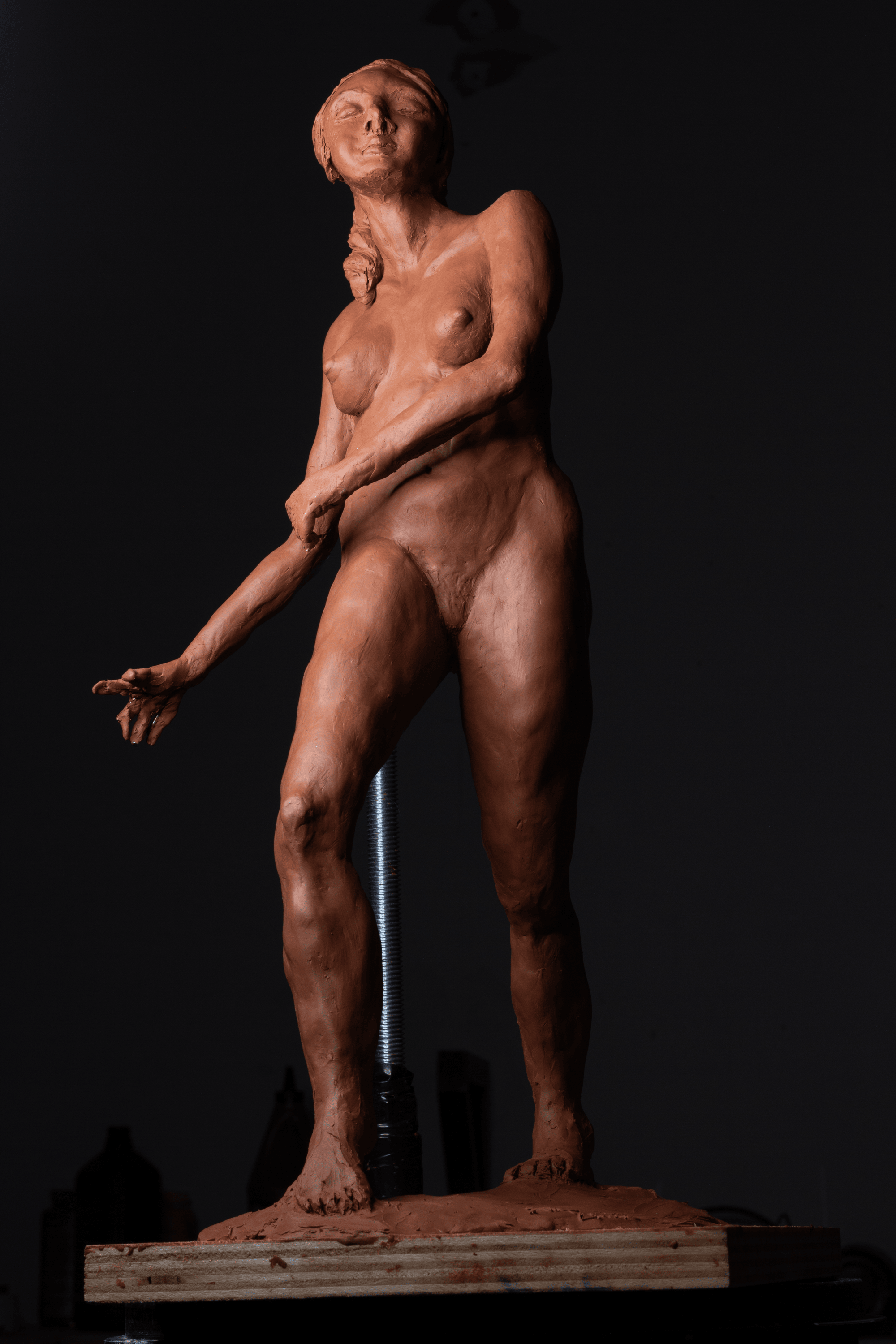
We needed to develop a solution that would allow us to create a perfect replica without ever laying a finger on the original artwork.
Photogrammetry
Using a regular old Canon DSLR camera, we captured hundreds of high-resolution photos of the sculpture from every conceivable angle.
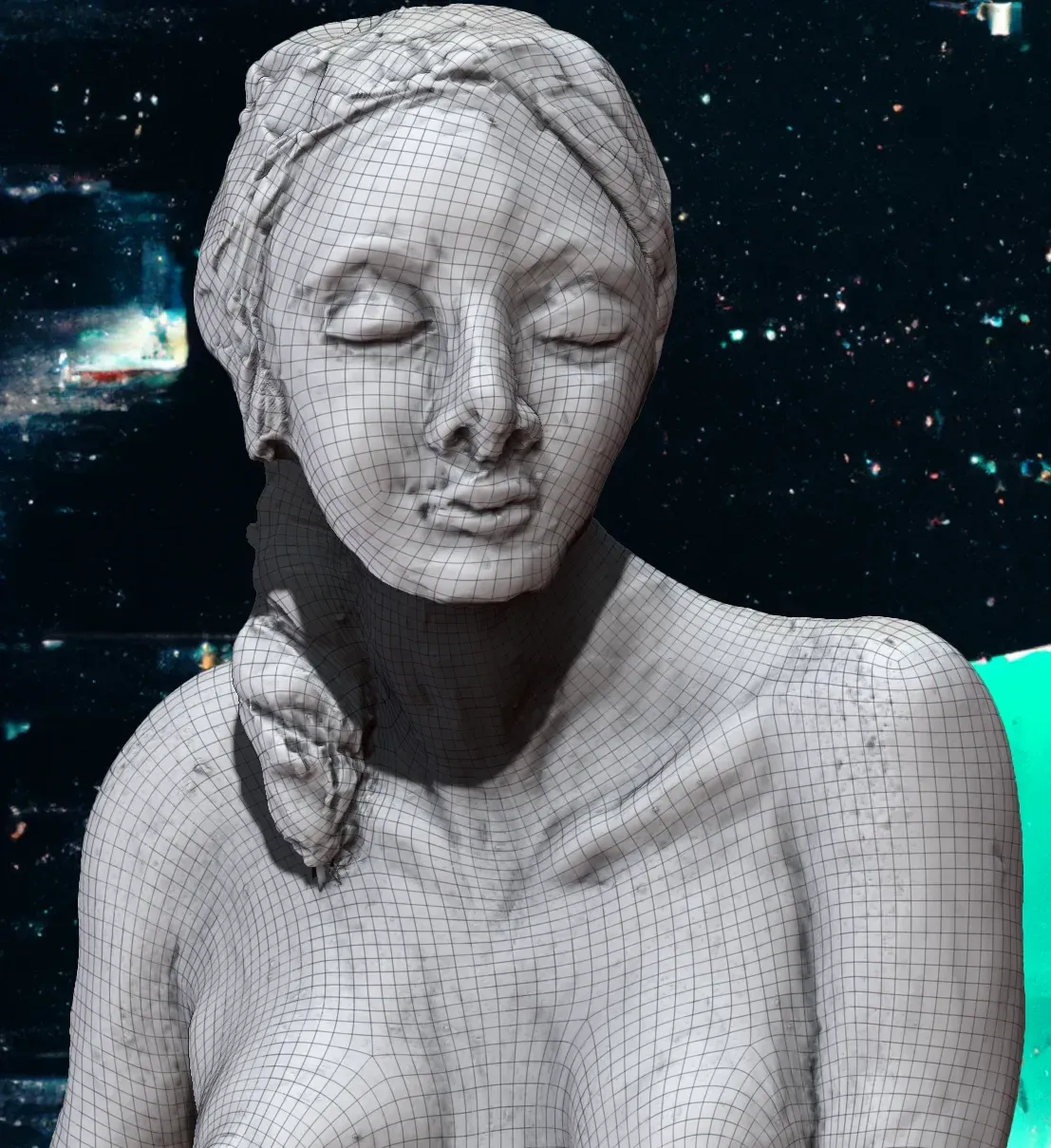
These images were then fed into specialized photogrammetry software, which constructed a detailed 3D digital model of the sculpture.
In this scenario we used Reality Capture running on a dual GPU instance on Amazon's Elastic Compute Cloud.
A remote desktop solution called NICE DCV enabled us to have near zero latency even when working with complex 3D data at 4K and even allowed us to forward our local 3Dconnexion mouse over the network to to the remote datacenter in Oregon.
Digital Refinement
Once we had our digital model, we used ZBrush, a digital sculpting tool to import the 3D scan data to prepare and clean up the scan.
3D Retouch
We digitally reconstructed the Plasticine hands that were smooshed during transportation from place to place. This process involved replacing, enhancing details and correcting asymmetries and disproportions.
While making these adjustments, it was crucial to maintain the overall style and intent of the original sculpture. The goal was to revive than alter the artist's work. We also scaled up the entire piece by approximately 5% to add some more presence to the final cast since we're no longer bound by the original sculpture.
3D Printing
With our refined digital model complete, we brought the sculpture back into the physical world using a 3D printer.
Creating the Mold Shell
Returning to ZBrush, we digitally "inflated" the sculpture model to create a shell with a precisely calculated gap - just enough space to pour in the silicone for our mold.
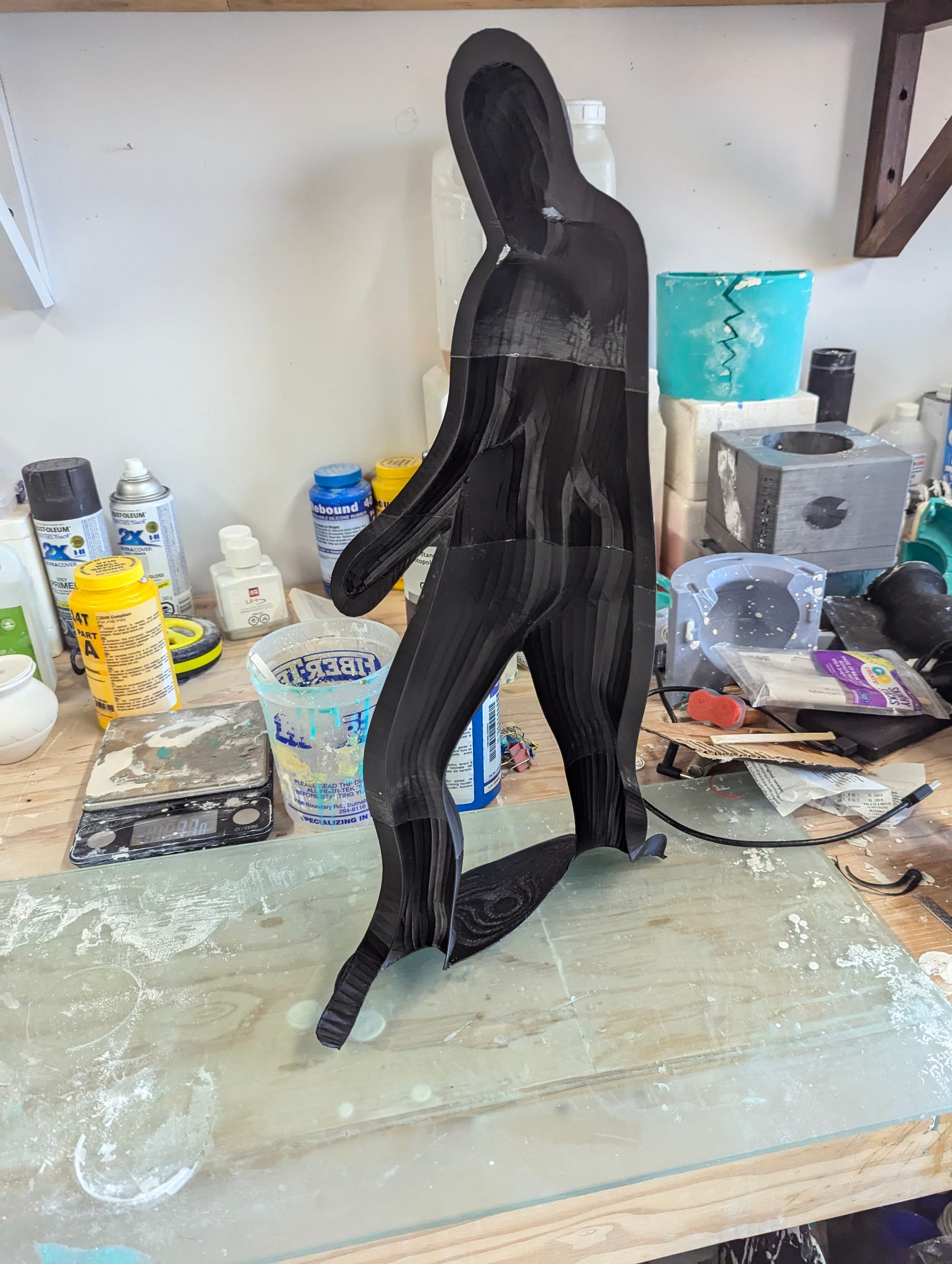
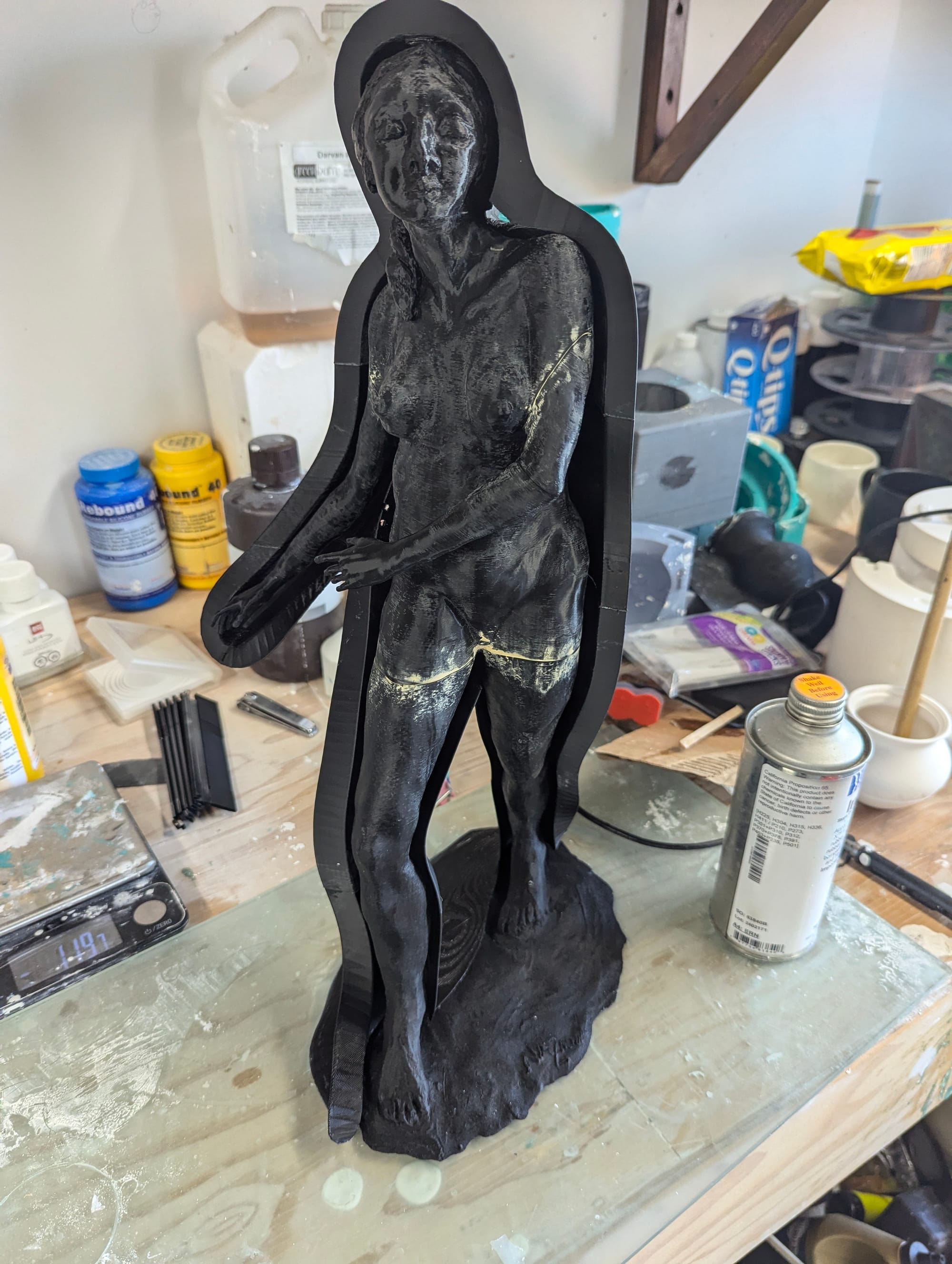
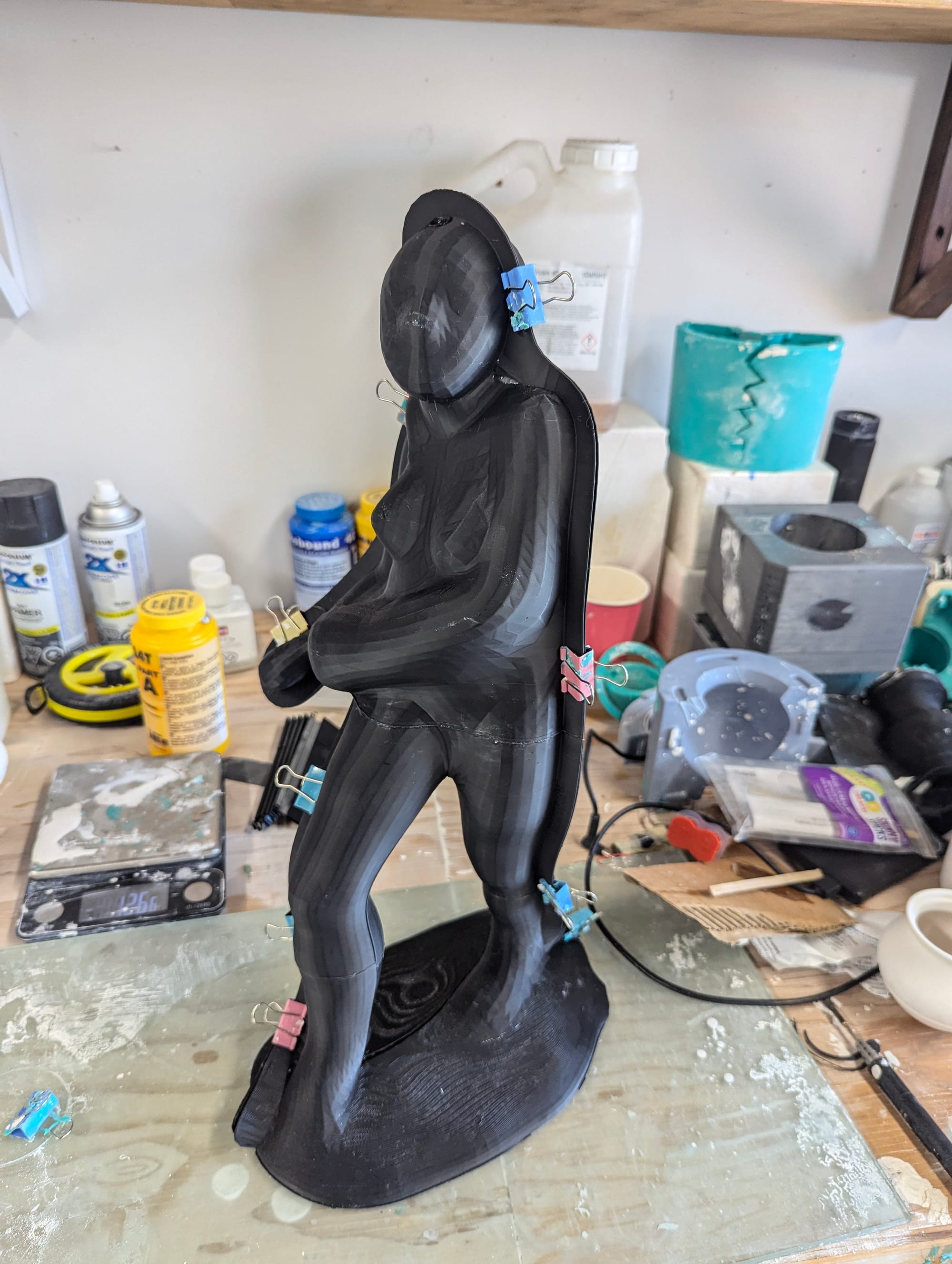
This shell was designed in two parts (front and back) with an added flange to ensure a secure fit when assembled.
Silicone Mold Creation
We 3D printed the shell and placed our printed sculpture inside. Silicone was then carefully poured into the gap between the shell and the sculpture.
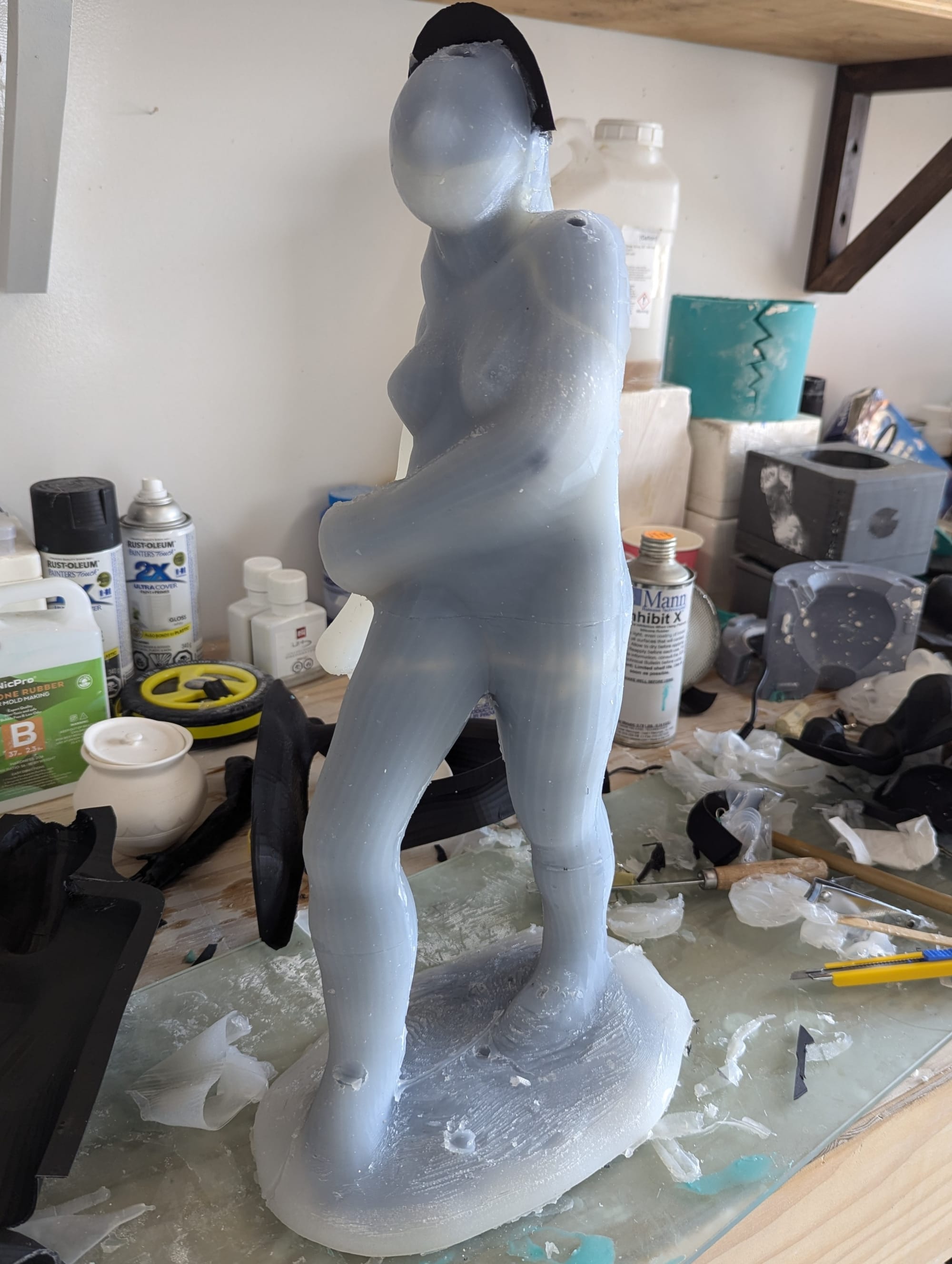
After curing, we removed the shell to reveal a perfect silicone mold of our enhanced sculpture.
The silicone mold was delicately sliced along the seam to create two halves. These halves, along with the shell pieces, were then reassembled to prepare for the final casting.
Casting the Final Piece
For the final step, we mixed and poured Hydrocal, a gypsum cement known for its strength and fine detail reproduction, into the prepared mold.
Once set, we carefully removed the cast to reveal the finished product - a flawless, scaled-up reproduction of the original sculpture, complete with our digital enhancements.
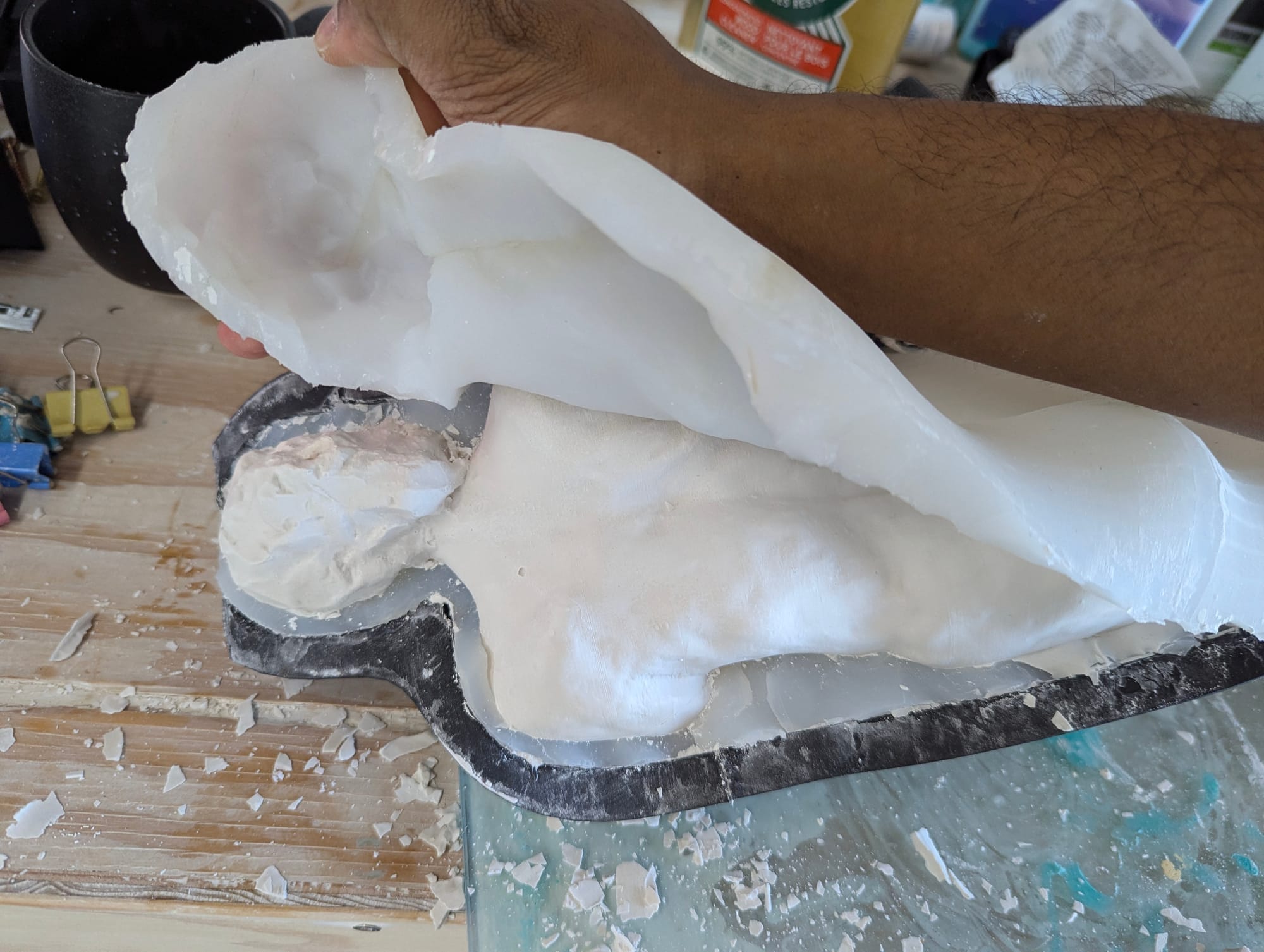
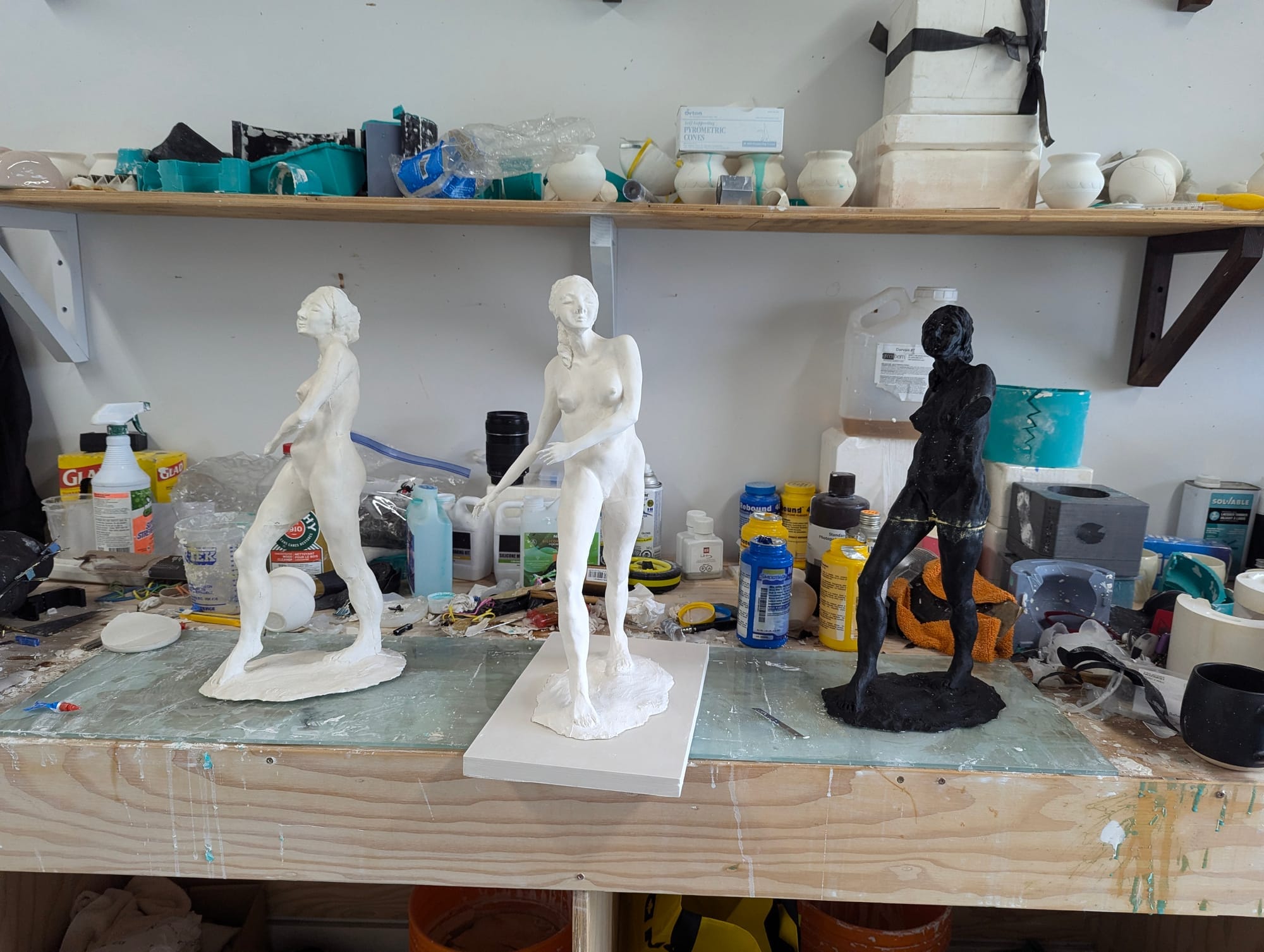
The Result
Almost perfect, sans fingers. We cast another one, see below.
Our client received a perfect replica of her Rome workshop creation, subtly enhanced and slightly larger, without her original plasticine piece ever being touched.
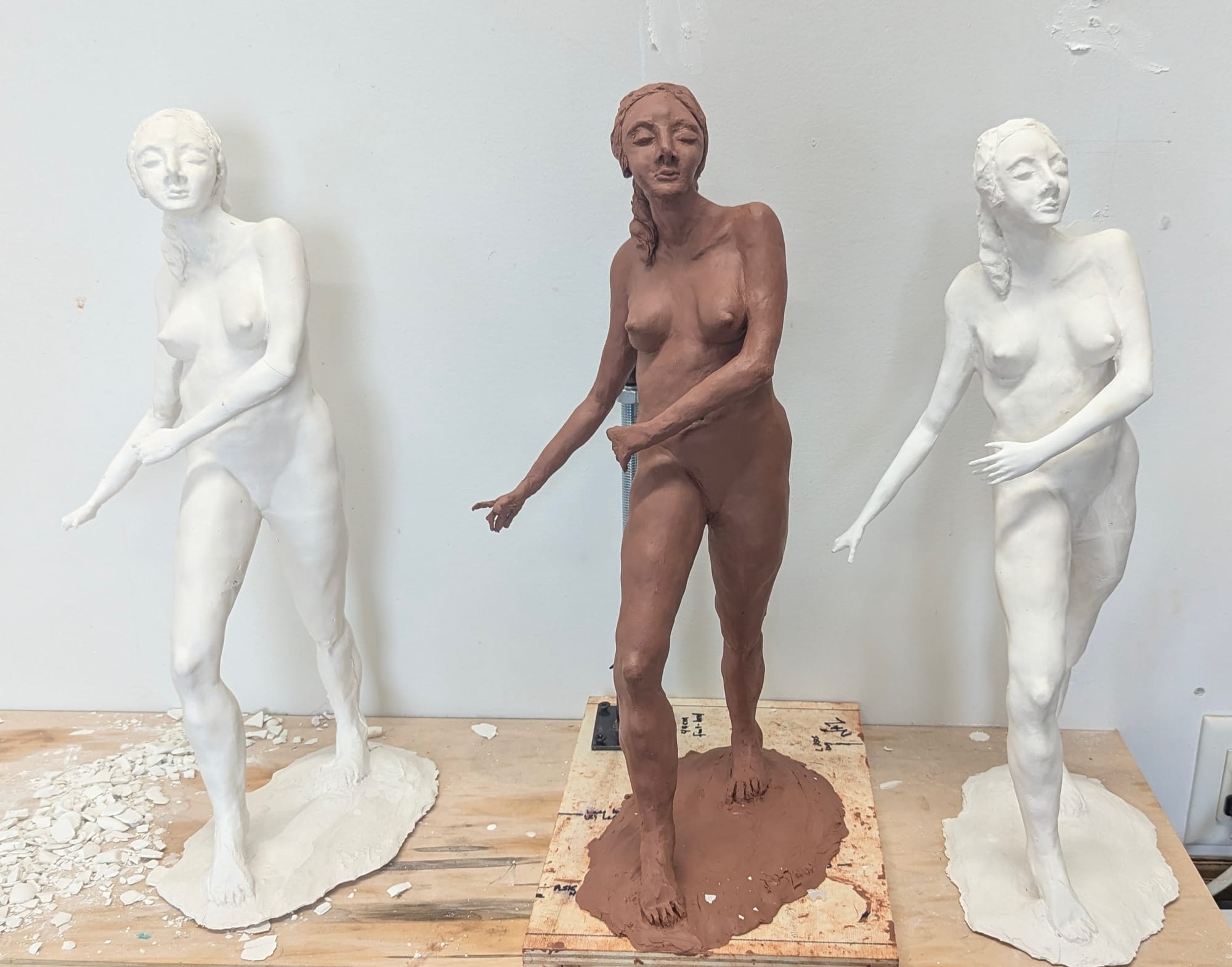
This project showcases the potential of combining traditional artistic skills with cutting-edge digital technologies to push the boundaries of what's possible in art reproduction.
Conclusion
This no-contact approach to mold making and casting opens up new possibilities for preserving and reproducing delicate or valuable artworks. By leveraging accessible technologies like consumer-grade cameras, 3D printers and digital sculpting software, we're able to offer innovative solutions that respect the integrity of original pieces while delivering stunning reproductions.
Whether you're an artist looking to preserve your work, a collector seeking to replicate a prized possession, or a gallery aiming to share limited edition pieces, our no-contact mold making and casting process offers a safe, accurate, and revolutionary approach to art reproduction.