
From Bronze to Bites: Crafting Edible Artifacts with 3D Printing and Silicone Molds
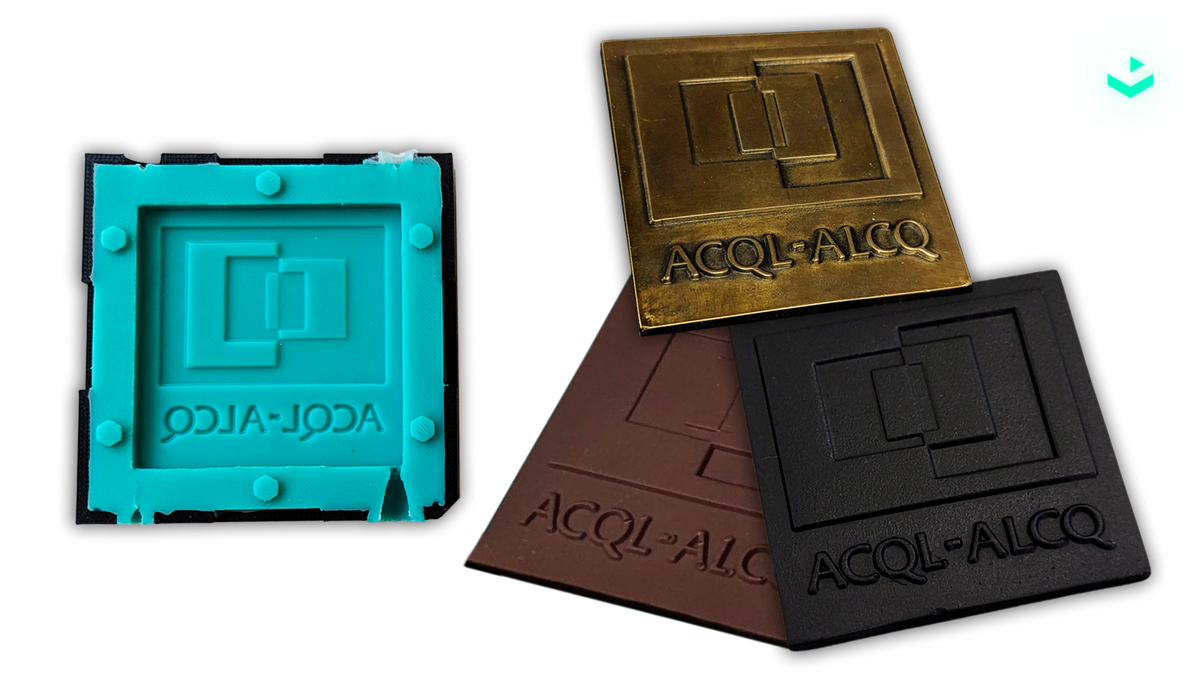
What started as a customer's request to replicate a bronze medal has led me down an unexpected path. Using a blend of 3D printing and age-old molding techniques, I've managed to transform a weighty bronze artifact into delicious chocolate replicas.
The Genesis of an Idea
It all began with a seemingly straightforward request: a client asked if we could create two plastic copies of a square bronze award. While a high tech replication process could have been used, the solution lay in a traditional yet versatile approach - a silicone mold. However, this project was about to take an unexpected turn.
As I contemplated the mold-making process necessary for the acrylic copies, an idea struck me. Why stop at plastic? Since we would already be designing a silicone mold, why not offer a food safe chocolate mold as well? This simple thought sparked a fascinating journey that would blend age-old techniques with modern technology.
The Bronze Original: A Canvas for Creativity
The bronze award that started it all was a modest yet intricately designed piece. Square in shape, it measured 2.5 inches in width and height, with a thickness of about 1/4 inch. What made it truly special were the debossed text and logos adorning both sides of the square, adding depth and character to the metallic surface.
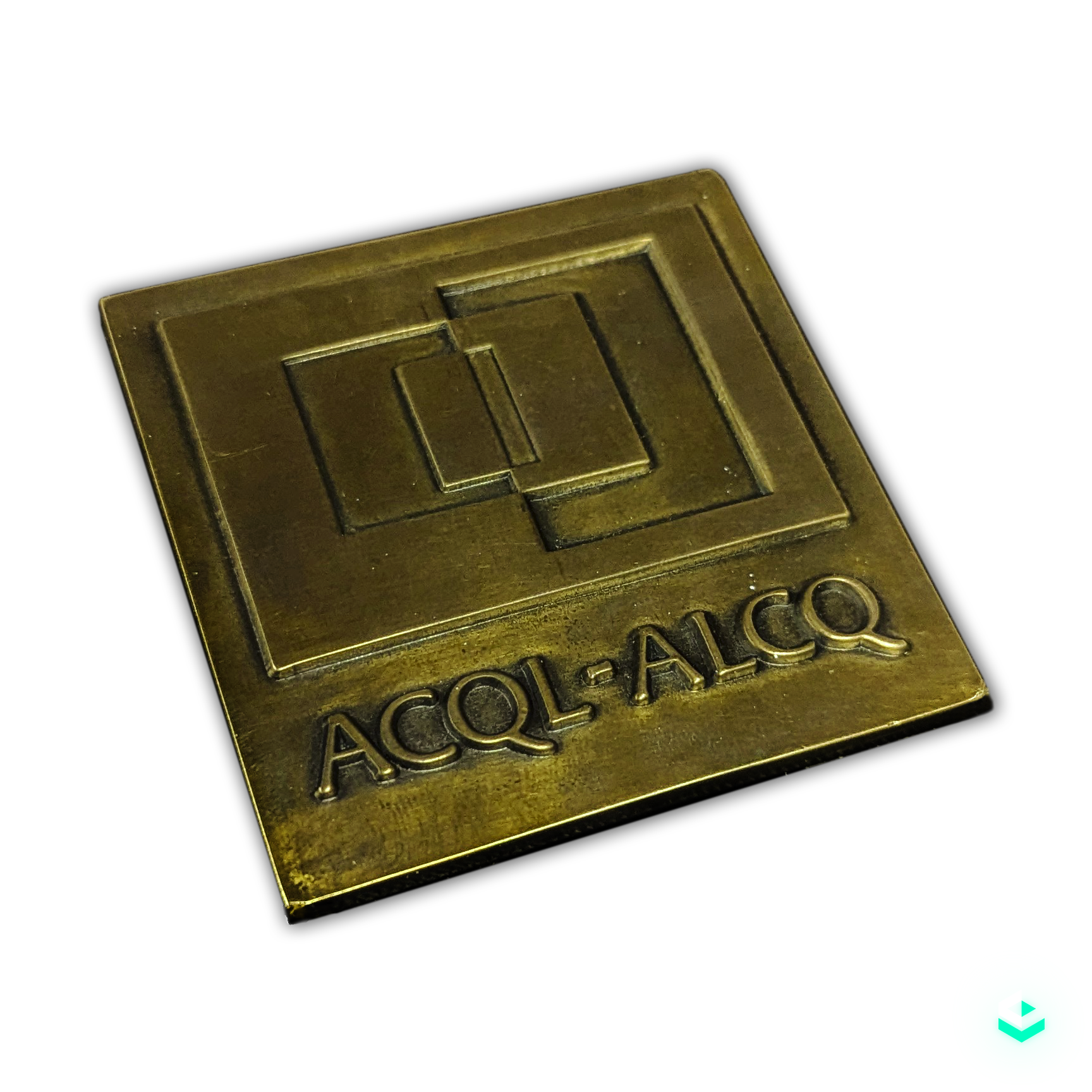
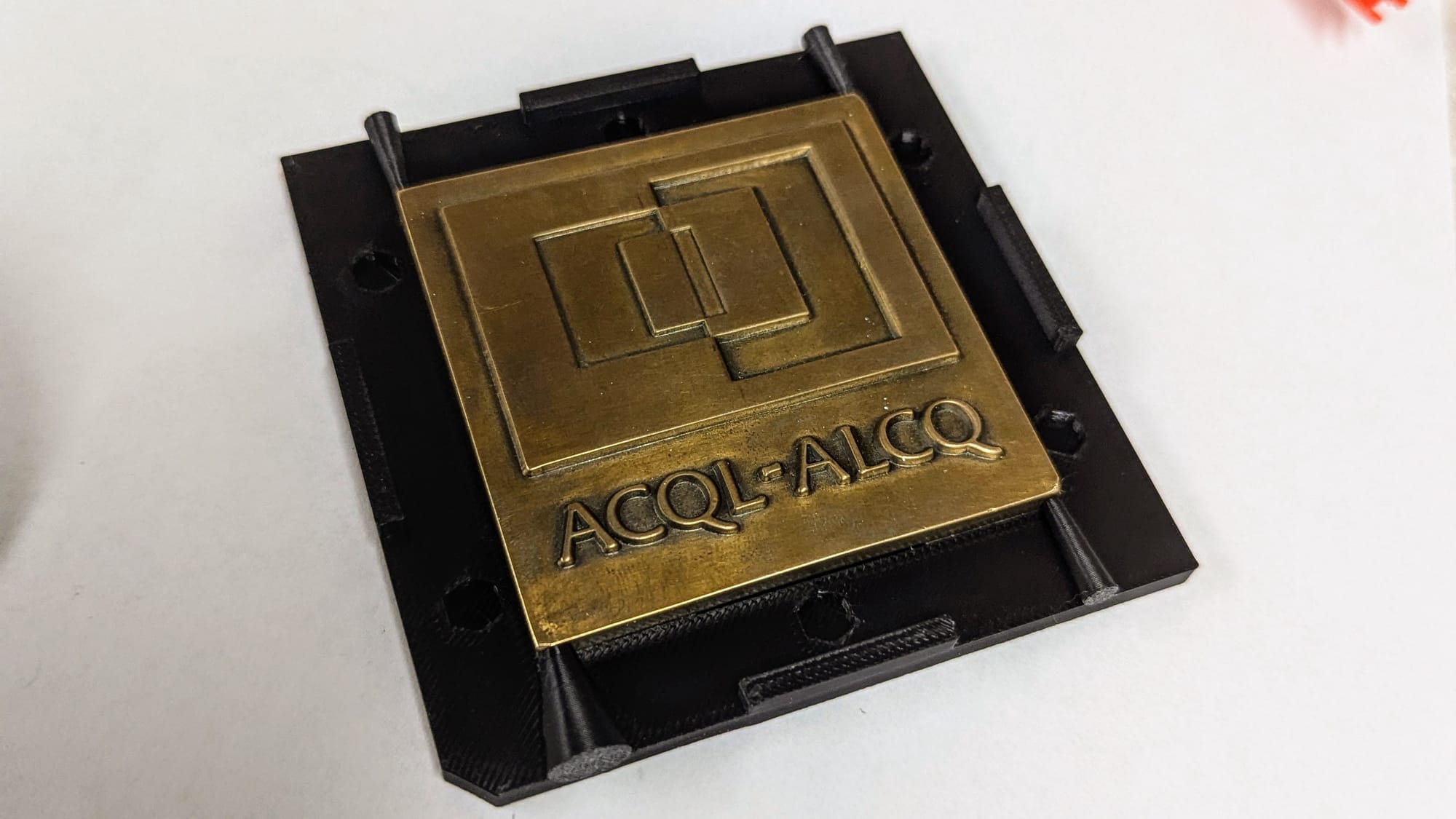
These features, while beautiful, presented our first challenge. The raised text and logo on both sides necessitated a two-part mold, adding complexity to our replication process. We needed to devise a method to hold the bronze award securely in place while pouring the first part of the silicone mold, which would also create the crucial parting line for the mold.
Bridging Technologies: 3D Printing Meets Silicone Mold-making
The solution to our challenge came in the form of 3D printed casings. These weren't just simple containers; they were meticulously designed to serve multiple purposes throughout the mold-making process.
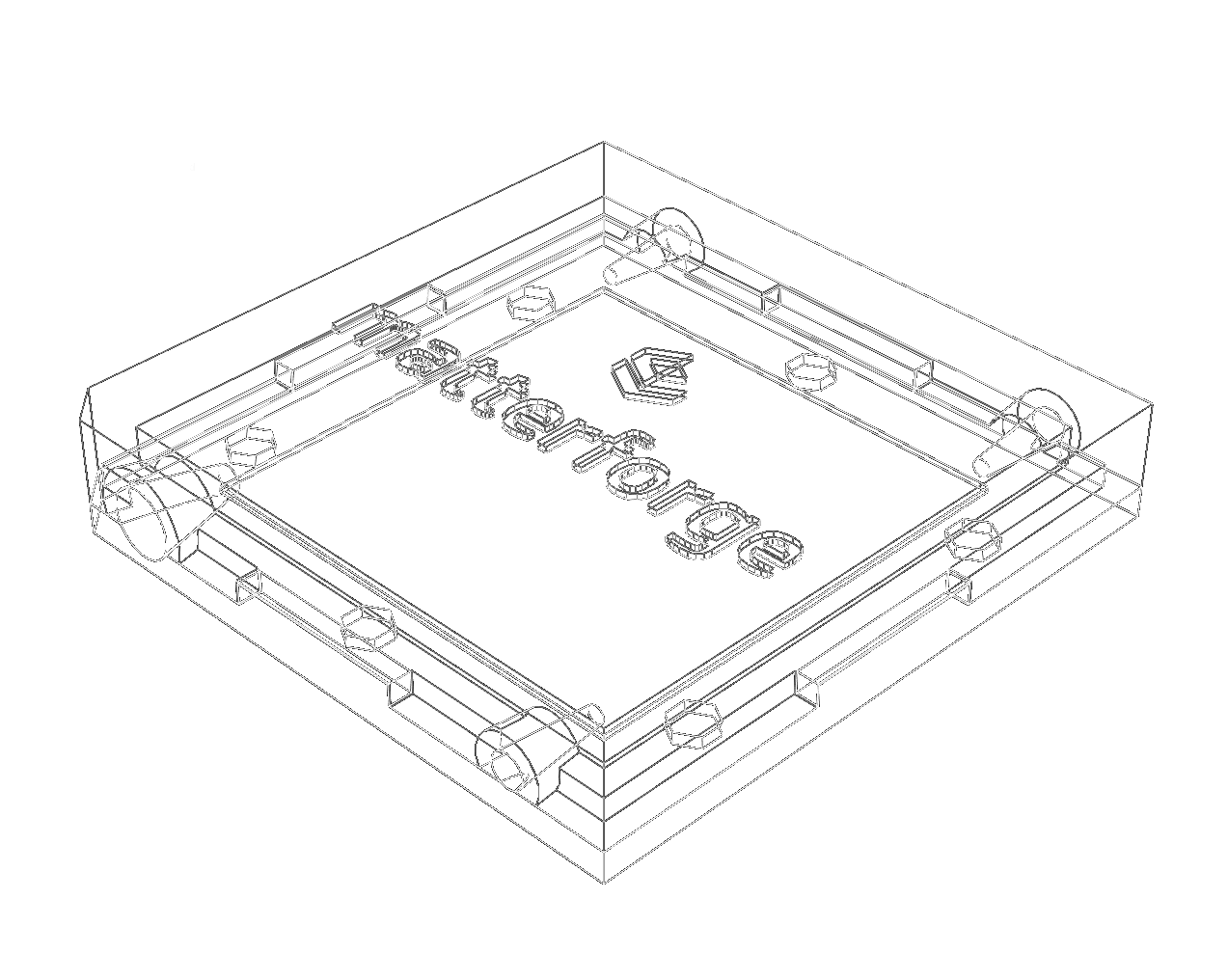
The casing's design was crucial, incorporating several important features:
- A holder to keep the bronze object in place and perfectly centered
- The creation of the parting line between the two parts of the silicone mold
- Hex-shaped voids for the silicone to flow into, forming keys that would register with the second part of the mold
- A cone-shaped sprue and vents, securely held in place without needing to alter the original bronze award
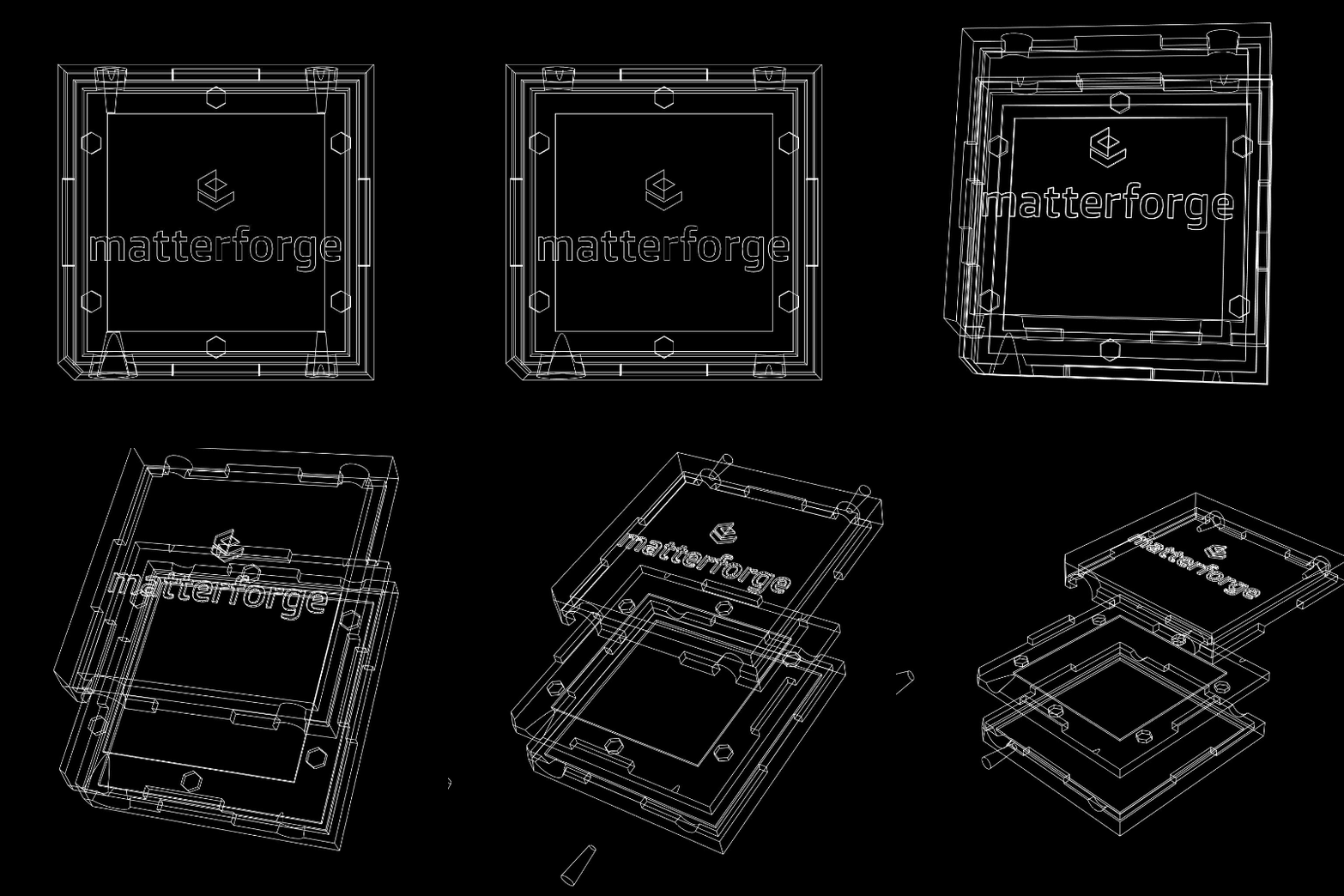
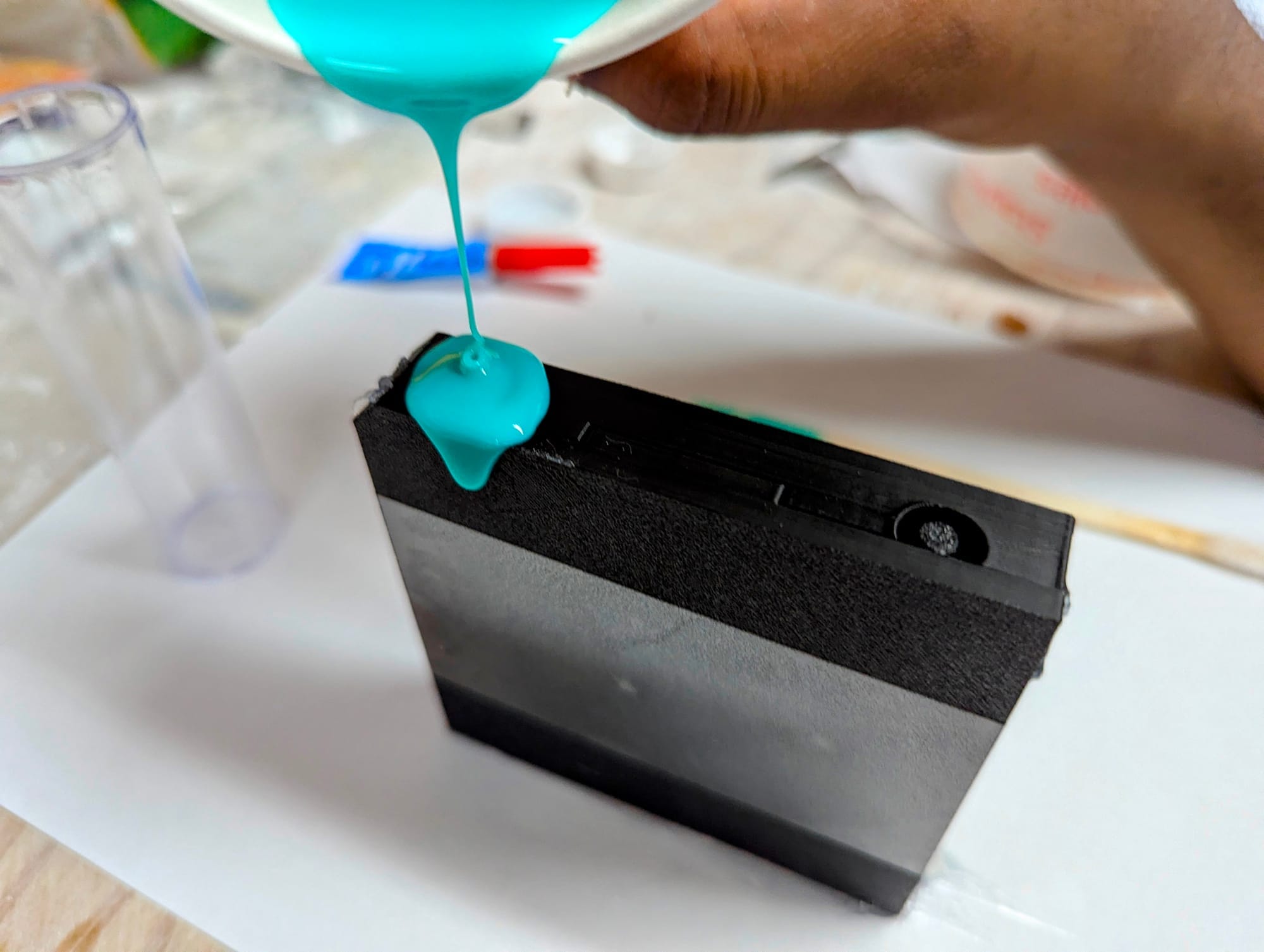
This use of 3D printing streamlined our process significantly. Once the casing was designed and printed, the only step left was to place the object and pour the silicone.
For the mold itself, we chose a food-safe, platinum-cure silicone from Smooth-On. This selection was crucial, as it would allow us to create not just acrylic replicas, but a mold for the edible chocolate ones as well.
From Metal to Acrylic: The First Transformation
With our mold prepared, we moved on to creating the acrylic copies. We opted for a two-part, clear, eco-friendly epoxy - a common casting material known for its quick results and good detail reproduction. However, this choice came with its own set of challenges.
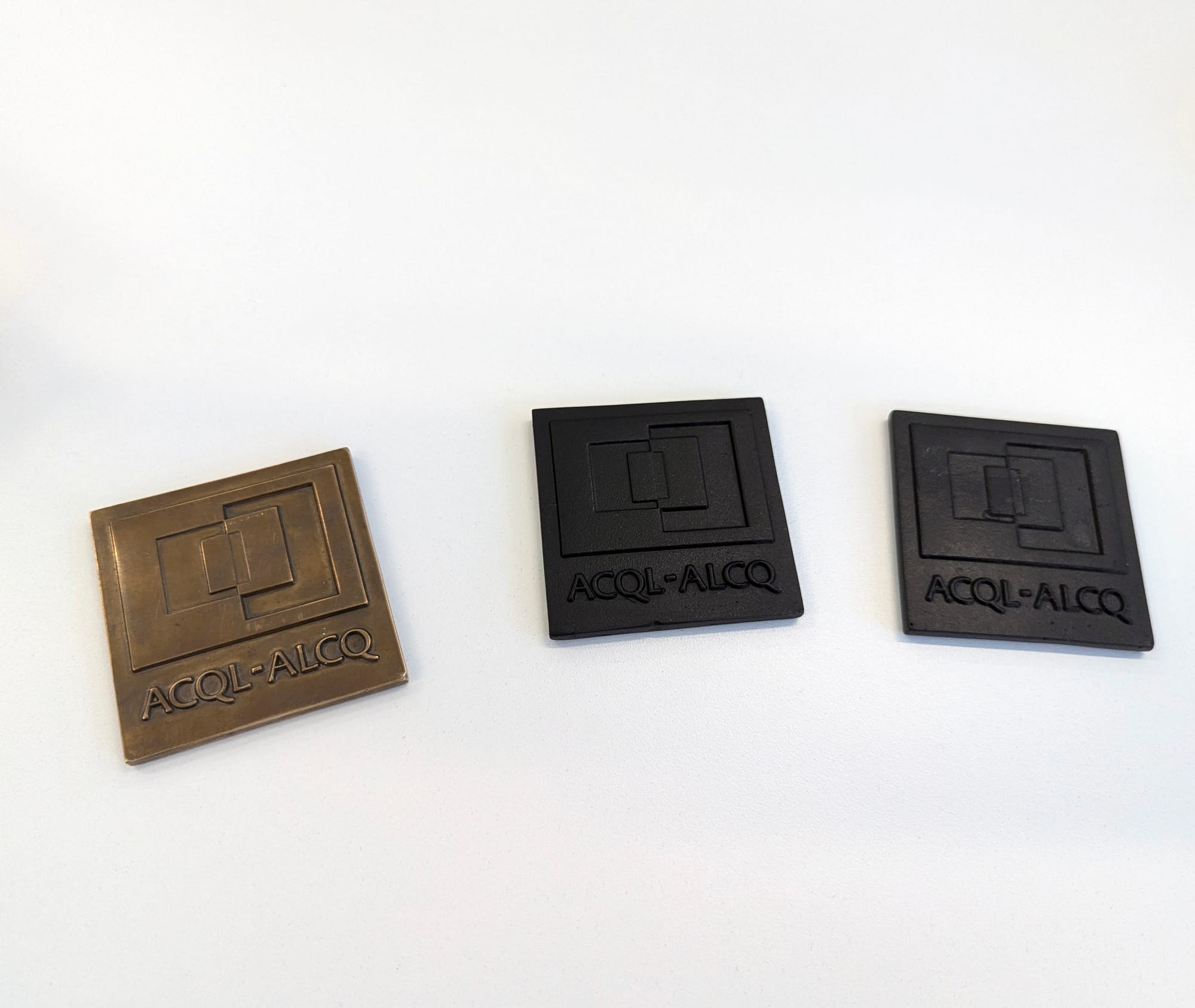
The epoxy's low viscosity and long cure time, while excellent for releasing air bubbles and capturing fine details, proved to be a double-edged sword. It had a tendency to leak out of every crack and crevice, requiring extra care and precision during the casting process.
A Sweet Finale: Chocolate Replicas
While the specific details about the chocolate casting process is beyond the scope of this article, we can imagine the excitement of pouring tempered chocolate into our carefully crafted mold. The same intricate details that once adorned a weighty bronze square would now be captured in delicious, edible form.
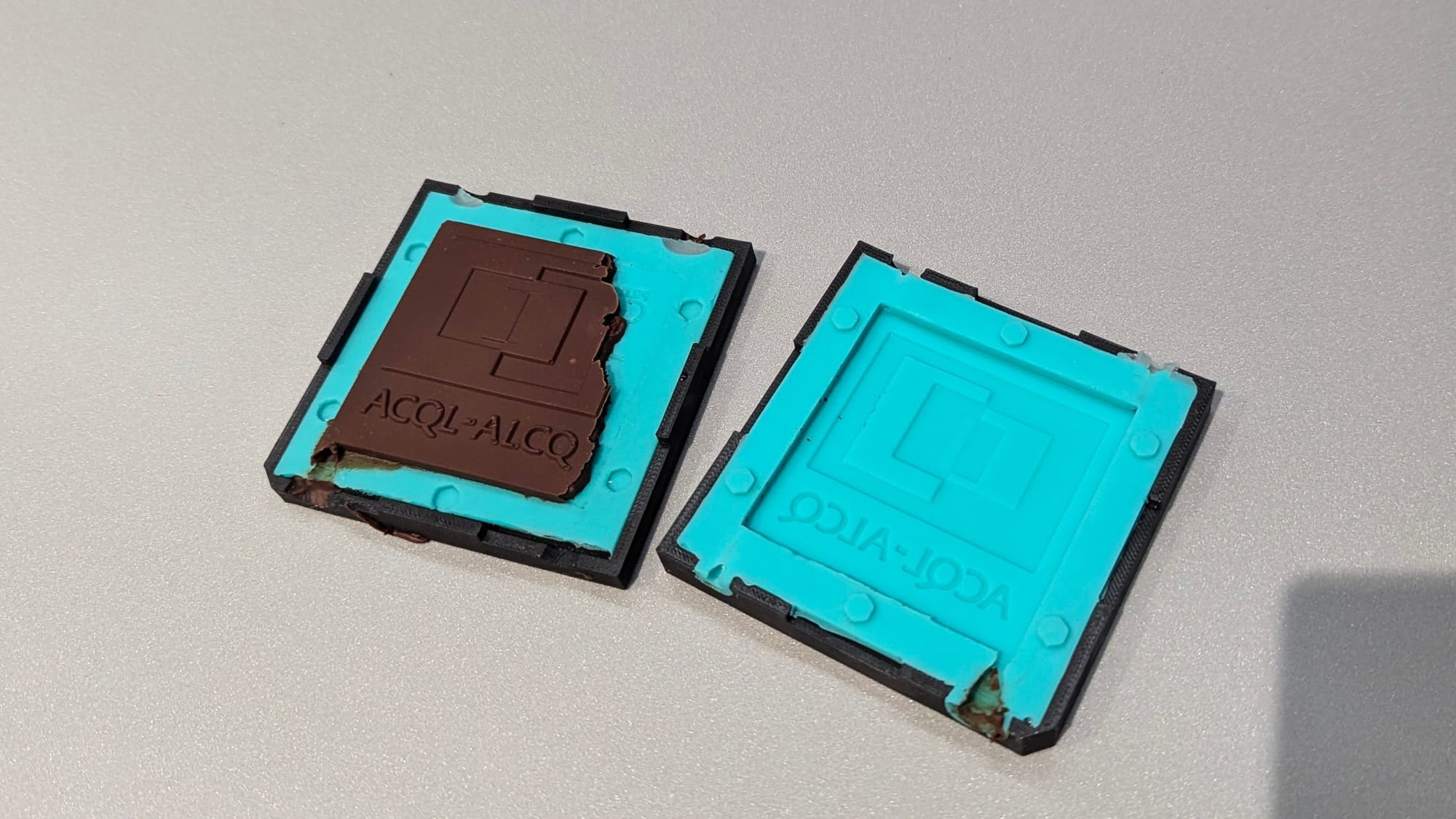
It is important to note that a separate silicone mold was made for casting chocolate to ensure food safety. The original silicone mold used to cast the acrylic replicas were not reused to cast chocolate. The design of the mold and casing however were left unchanged.
This entire process, from receiving the bronze award to producing the final chocolate replicas, took about 8 hours. It encompassed CAD design, 3D printing of casings and holders, and the mixing and pouring of silicone rubber.
Reflections on a Journey of Transformation
What began as a simple request for plastic replicas evolved into a fascinating exploration of materials and techniques. This project demonstrates the incredible versatility of modern manufacturing processes. With the right combination of creativity and technical skill, we can transform objects across a spectrum of materials - from weighty metals to delicate chocolates.
Moreover, this journey underscores the importance of thinking outside the box in custom fabrication. By offering chocolate replicas alongside the requested acrylic copies, we not only met our customer's needs but also expanded the possibilities of what can be achieved with the same mold design.
As we look to the future, one can't help but wonder: what other unexpected transformations await? In a world where a bronze award can become a chocolate treat, the possibilities seem as limitless as our imagination.